Berlin to Copenhagen by car: a (not so touristic) weekend road trip
A weekend drive from Berlin to Copenhagen with an overnight stop in Odense, a windy bridge crossing, far too many pastries, and a street food crawl around Refshaleøen. Where we ate, where we slept, and what we would do again.
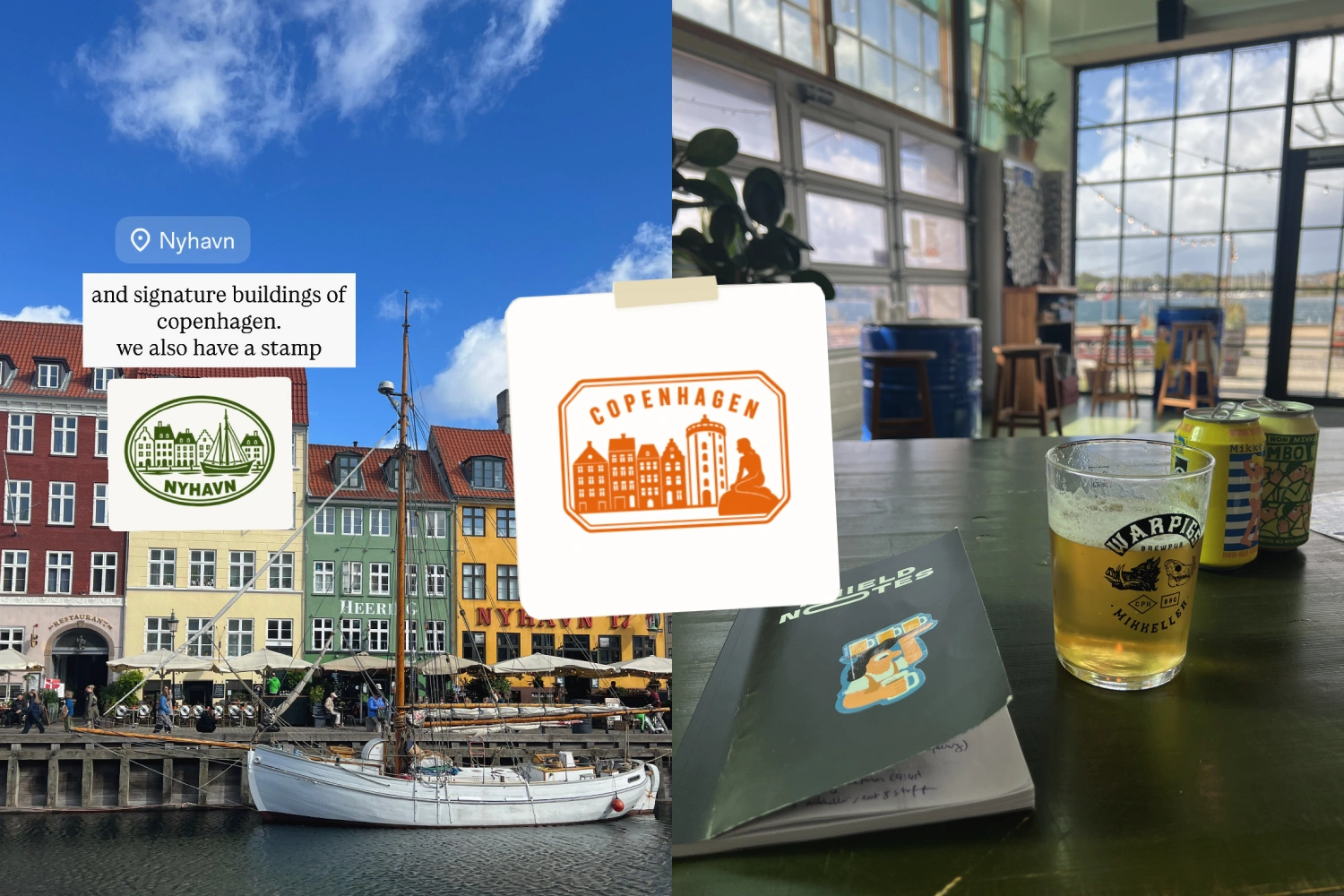
We had a free weekend and a car, so we drove from Berlin to Copenhagen.
You can fly it in an hour. We took about eight hours of driving over two days instead, and that was kind of the point. The random stop in the middle is the bit we still talk about.
Here's where we ended up, and what we ate.
Our favourites, mapped
Everything we'd go back to, all in one place. Switch to the list if you'd rather just read the names.
14 places
- 1Original Pita a surprise stop near Odense, fresh pita
- 2Storebælt the bridge crossing between Funen and Zealand
- 3Organic Market the shop that runs itself, croissants included
- 4Nyhavn the coloured houses, mobbed by midday
- 5galst bageri bread, cheese and coffee
- 6La Cabra the cardamom bun
- 7Gasoline Grill the famous burger, comes rare by default
- 8Reffen street food by the water
- 9Hip Hop breakfast pancakes
- 10Nordic Hotdog the classic danish hotdog
- 11Mikkeller beer by the water, the coziest one
- 12Hart Bageri a bake and a Cocio
- 13Noma Projects design shop, we left with a cap
- 14Mio Pizza wood fired takeout for the last night
The drive
Berlin to Copenhagen, split over two days
Berlin
6 hours to Odense. we stopped here for the night
Odense
2 hours to Copenhagen. over the Storebælt bridge, tolled
Copenhagen
Around 8 hours of driving in total, not counting stops.
You can do it in one go, but we wouldn't. Rolling into a new city late and tired is not the way to meet it.
Odense is the right place to break it. It's almost exactly halfway, and it's the birthplace of Hans Christian Andersen. The old centre is really pretty: low coloured houses, cobbled lanes, so quiet on a weekday evening. We planned nothing. We walked, found dinner, slept. That was enough.
We made an Odense stamp for Stampie too, so the overnight stop counts for something.

The pita we didn't plan. We love finding random places on the go, and this one popped up while we were hungry and staring at a map instead of a guide. Fresh pita, loads of choice for what goes inside, and so good we still bring it up. Proper road trip material.
A shop that runs itself. We found this cute little organic market that's fully automated: you unlock the door with their app, grab whatever you need, and pay before you leave. No staff, no queue. There was a proper bakery counter inside too, so, croissants for the road. We spotted a few of these around Denmark after, and the idea kind of grew on us.
Bridge or ferry. You can cut the drive down by putting the car on the ferry at Puttgarden, but we skipped it. You have to book a sailing and plan the day around it, and by the time we checked it was the pricier option anyway. Driving the whole way adds an hour or two and takes you over the Storebælt bridge between Funen and Zealand. It's tolled, and if you like driving, no hardship at all. It cost us around 30 euros one way, paid by card at the booth. You can pay there with card or cash, or buy it online at storebaelt.dk for a few euros less, just do it in advance: the online ticket takes about 20 minutes to process. We didn't know that, so we ended up paying at the barrier.
It was grey and windy when we crossed, the towers vanishing into low cloud. Not exactly a postcard, but a better memory than a sunny day would've been.
Where we stayed
Odense, in a dog-friendly hotel. We travel with a dog, so that narrows the list a bit. Scandinavia isn't cheap, and a dog adds to the bill: 40 euros extra for one night here. Though she got a whole welcome bowl of goodies at check-in (tennis ball, blanket, treats) and we got nothing, which felt a little unfair. It's normal enough in Denmark that you just budget for it.
Copenhagen, in an Airbnb in Lyngby. We skipped the centre and stayed in a small town about fifteen minutes out. Cheaper, quiet at night, and we didn't lose anything for it: we had the car, so we drove in whenever we felt like it and left when we were done.
That's the bit worth saying out loud. Staying outside the centre is only a compromise if you're relying on timetables. With a car it's just a cheaper, quieter base, and you skip the whole saga that is parking in central Copenhagen.
Where we ate
This was our third and fourth time in Copenhagen, which changes how you do a city. No Tivoli, no Little Mermaid, no queueing for anything. The plan was to have no plan: walk, find a bakery, sit down, repeat.
Our Copenhagen stamp in Stampie, for when you get there.

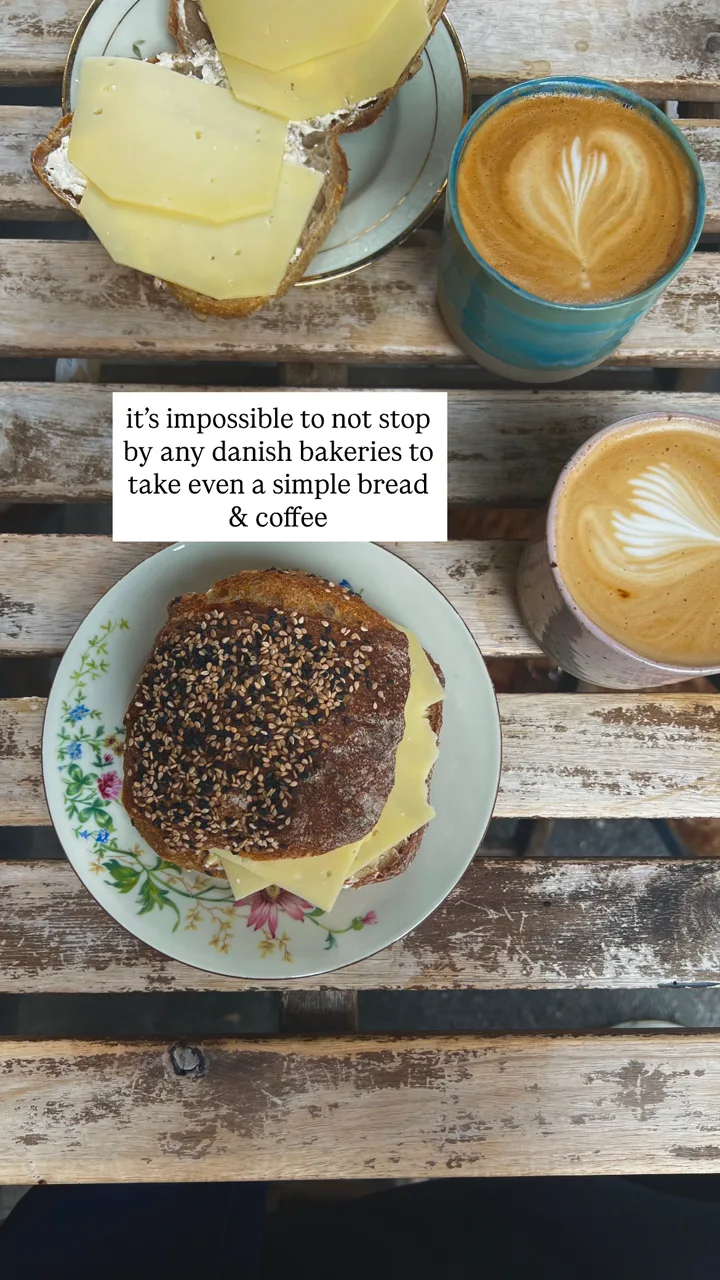
Start with fresh buns, butter and cheese. That was breakfast most mornings and it's really hard to beat. Add a cardamom bun if you want something sweet, or swap the whole thing for pancakes another day. The cardamom bun is the signature bake of the region and pretty much every bakery has one, so you can have a slightly different version every morning and call it research. It's basically impossible to walk past a Danish bakery without stopping. Two we kept going back to: galst bageri, for bread and coffee that turned a quick stop into a whole morning, and La Cabra, where we ended up on a friend's suggestion (though honestly, a bad cardamom bun is hard to find here).
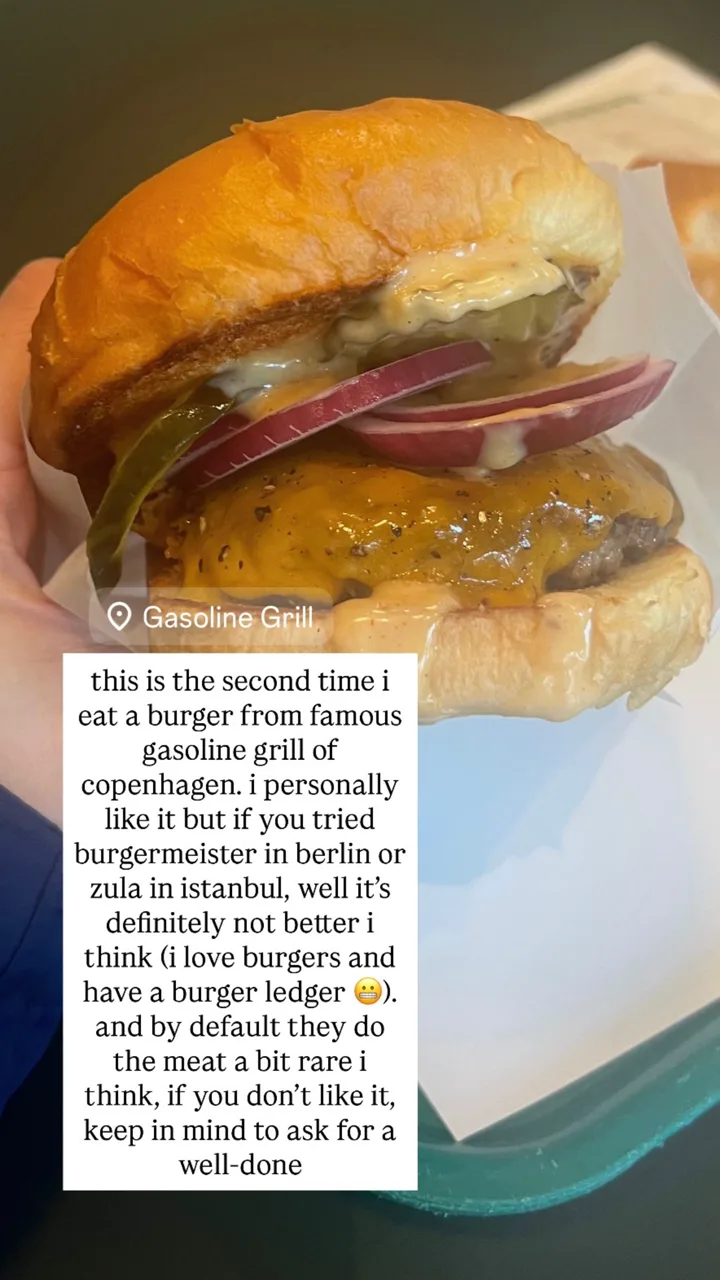
The burger question. My second time at Gasoline Grill, the one Copenhagen is famous for. I like it, I really do. But if you've had Burgermeister in Berlin or Zula in Istanbul, it's not better, I think. (I love burgers. I keep a burger ledger :D) One heads-up, since nobody told us the first time: they do the meat a bit rare by default, so if that's not your thing, ask for well done.
Reffen, for a group. A street food market built out of shipping containers on Refshaleøen, right by the water. The coziest spot we found, and the easiest place to keep a few people happy at once: everyone grabs something different and you sit together anyway.
Nyhavn, briefly. We said no tourist spots and then went anyway, because the coloured houses by the water really are the picture of Copenhagen, and it only takes ten minutes. We went early. By midday the quay is shoulder to shoulder.
We made a Nyhavn stamp for Stampie as well.

The street food 🌭
Out on Refshaleøen, a short walk from Reffen, there's enough to make a whole afternoon of it.
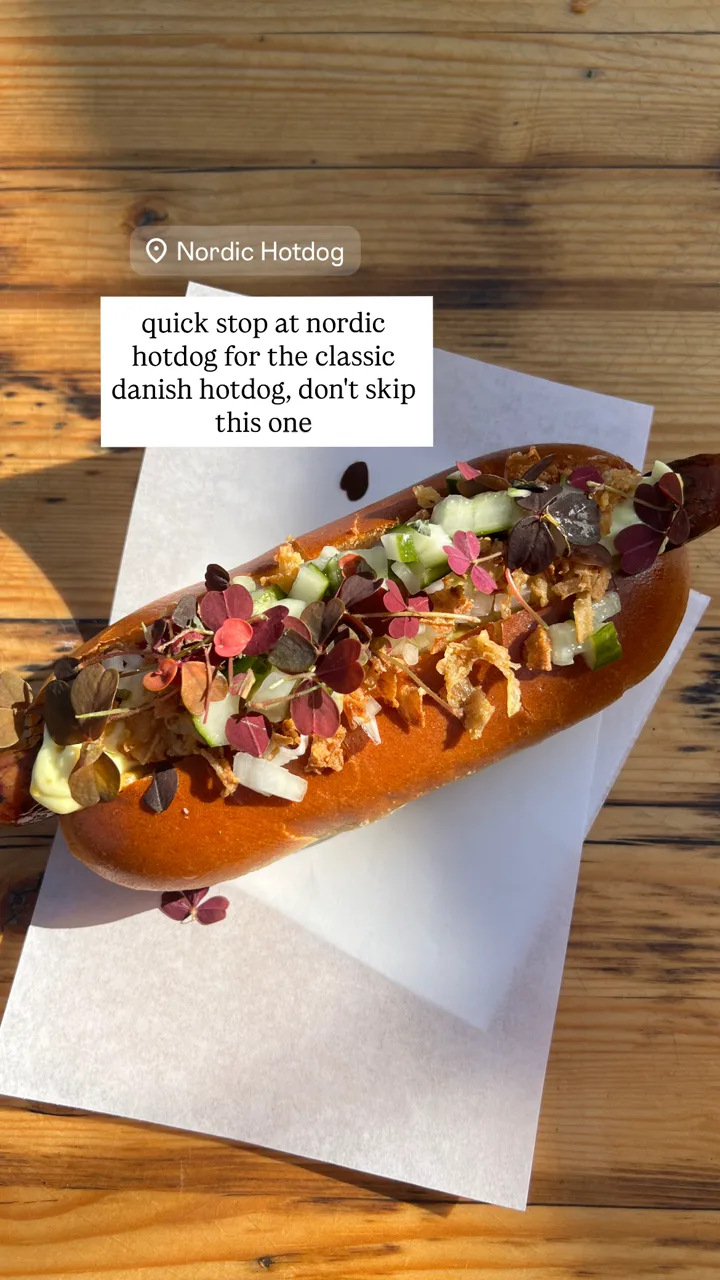
Nordic Hotdog, for the classic. If you're only having one Danish hotdog, this is the one. A snappy sausage in a soft bun, piled with remoulade, crispy onions, pickles and herbs.
Mikkeller, where it started for us. We're rarely far from a Mikkeller back home, they're all over Germany, Sweden and the rest of the Nordics, but this one might be the coziest we've been to. Big windows onto the water, a beer, somewhere to just sit and do nothing for a bit. Write a little, read a little, talk a little.
Hart Bageri, with a Cocio. One more bakery, because in this city there's no such thing as too many. We had ours with a Cocio, the Danish chocolate milk that's been around since 1951 and that we'll take over almost anything, given the choice.
Mio Pizza, for the last night. Takeout pizza for dinner, always. Mio's is wood fired and way better than a cardboard box has any right to be, which is exactly what you want when you can't be bothered to sit down on your last evening.
Scandinavian design
The other thing Copenhagen does really well, in between all the eating.
Noma Projects, a shop on the way. Not food, just a cute little design shop we stumbled into, full of caps and patches with their motto on everything: try new things. We couldn't leave without buying a patch and a cap.
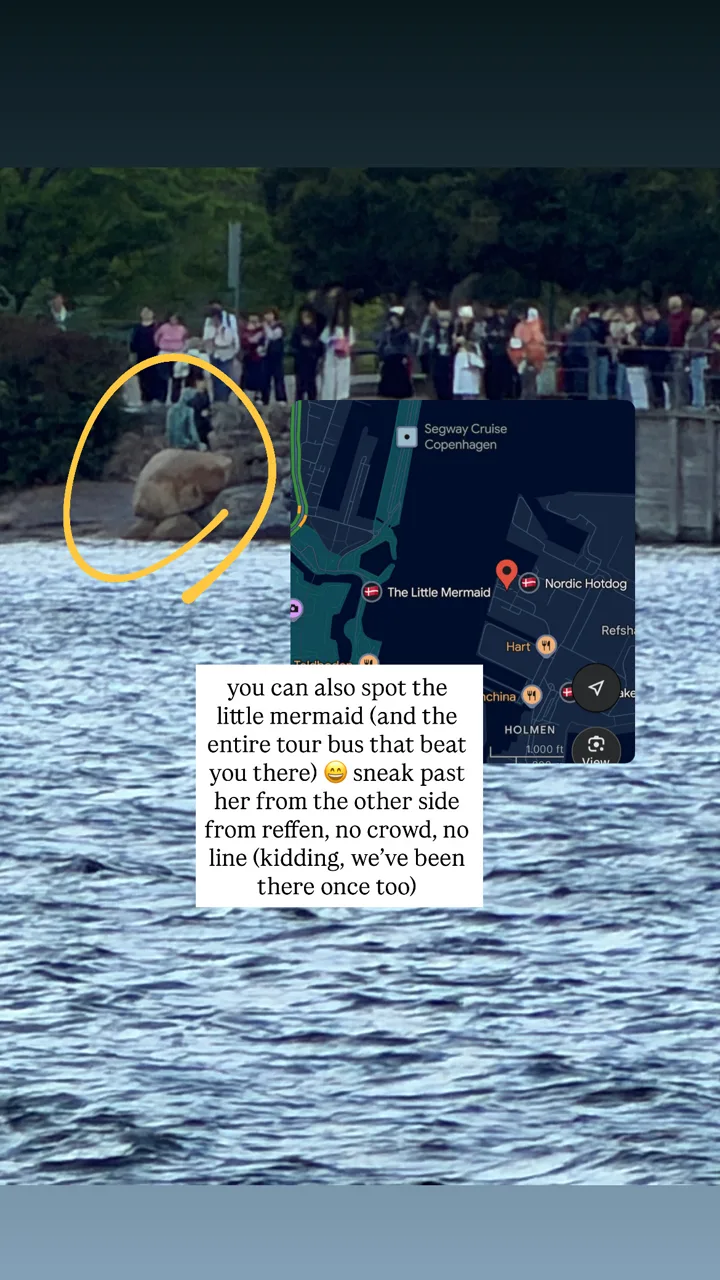
The Little Mermaid, from the other side. We said no big sights, and technically we stuck to it. You can spot her from the Refshaleøen side, across the water, no crowd, no line. (Okay fine, we've queued on the proper side once too.)
Rain, then sun, then rain again. That's Copenhagen in a weekend, basically: be ready for anything, any time of day. But it's a city that draws you in, and going back is always a good idea. It stays in our hearts, one more time.
Until the next one!
If you want more of these (the trips, the random finds, the pastries), we post them as we go on Instagram and TikTok. Come say hi.
FAQ
How long does it take to drive from Berlin to Copenhagen?
Around six hours to Odense and another two from there, so roughly eight hours of driving in total, not counting stops. Doing it over two days with a night in Odense is much nicer than pushing through in one.
There are two ways to get across. The ferry from Puttgarden is shorter on paper, but it ties you to a sailing time and worked out more expensive for us. The land route over the Storebælt bridge adds an hour or two and is tolled, and if you like driving it's the easier of the two. We took the bridge, and we'd do it again.
Is Odense worth an overnight stop?
Yes, and it's well placed for it. It's the birthplace of Hans Christian Andersen, the old centre is small and walkable, and you can see the good part of it in an evening and a morning without rushing.
Do you need a car in Copenhagen?
Not to visit it. The city is flat, compact and built for bikes. But if you're driving there anyway, the car changes where it makes sense to sleep: you can stay somewhere cheaper and quieter outside the centre, like Lyngby, and still come and go on your own schedule. That's the bit that makes it worth having.
What should you eat in Copenhagen?
Breakfast at any decent bakery: fresh bread or buns, butter and cheese, and a cardamom bun if you want something sweet with it. The cardamom bun is the signature bake of the region and nearly every bakery makes one. Beyond that, Reffen is the easiest place to eat with a group, and the bakeries are worth more of your time than the famous restaurants if you're only there for a weekend.
Where is the best street food in Copenhagen?
Refshaleøen, the old shipyard across the water. Reffen is the big one, a market of food stalls in shipping containers with every cuisine under one (open-air) roof. A short walk away you've also got Nordic Hotdog for the classic Danish hotdog and Mikkeller for a beer by the water. It's the easiest corner of the city to feed a group, and you can glimpse the Little Mermaid from this side without the crowd.
Behind Stampie
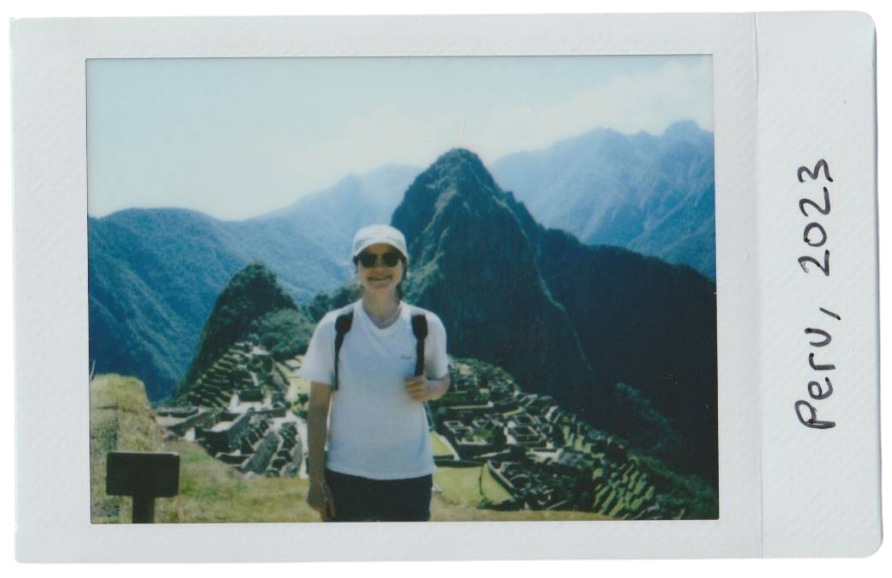
The idea for Stampie started in Peru 🇵🇪, back in 2023. I’ve always loved collecting passport stamps, that small thrill of seeing a new one land at the border. On that trip they just waved me through. No stamp. A small thing, but it stuck with me.
Turns out a lot of countries have quietly stopped stamping. A couple of years later I built the first version of Stampie for a hackathon, somewhere to keep that little ritual alive even when the ink doesn’t come. A passport-style journal for anyone who still wants this souvenir from every trip.
It quietly found its way to people. As an indie team, we keep working on Stampie in coffee breaks, on weekends, and from wherever the next trip takes us.

You might also like
How this post was made: AI-assisted tools may be used in research, drafting and image generation, then reviewed and edited by the author. Travel policies change quickly. For visa, border, and entry requirements, please check primary sources (official immigration sites, your embassy) before you go.
Spotted an error or something that doesn't look right? Report a concern and we'll take a look.