A short history of passport stamps (and why they're disappearing)
From Persian letters of safe passage in 450 BCE to the EU's Entry/Exit System ending stamps in 2026, the small ritual at the border has a much older story than the booklet it lives in.
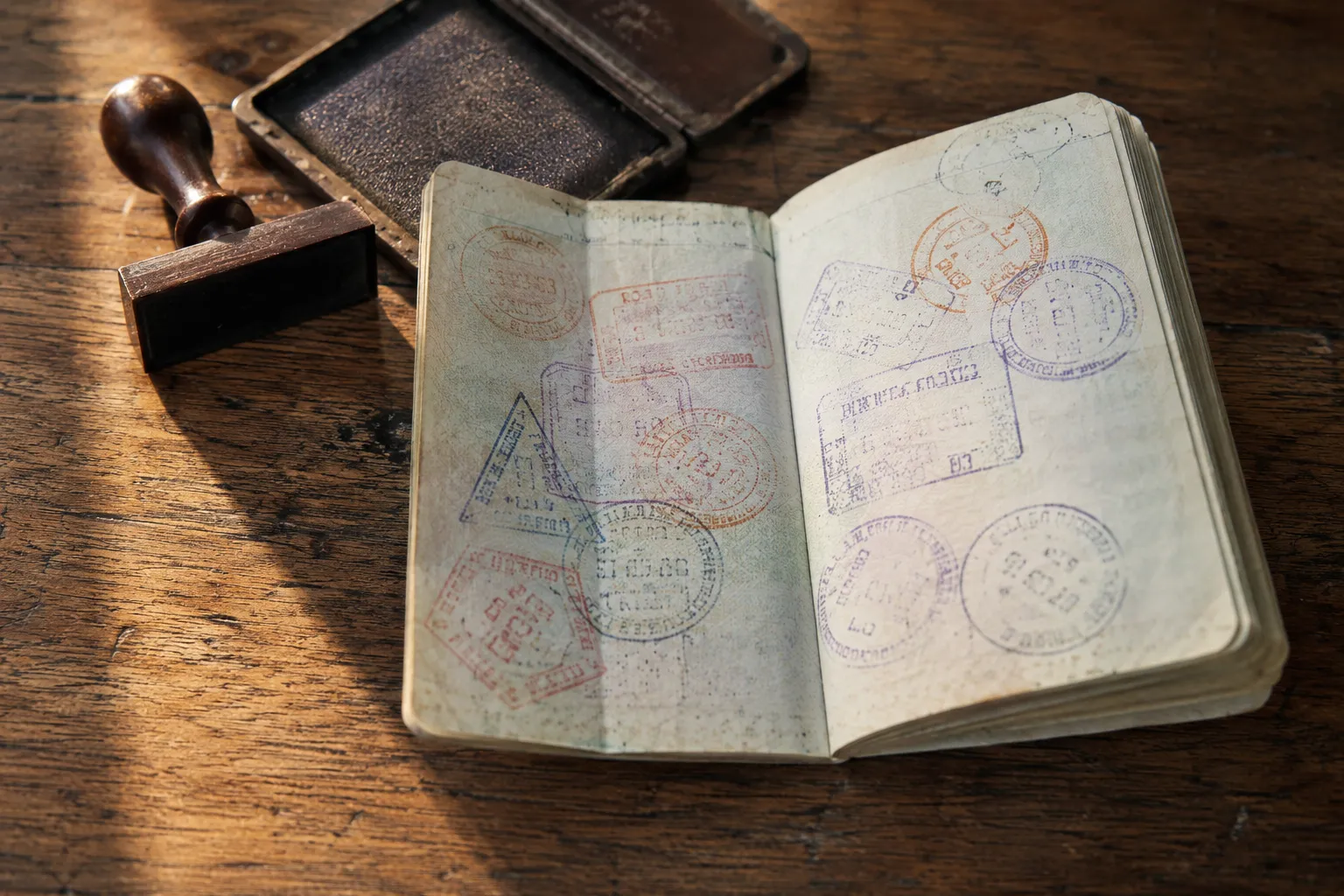
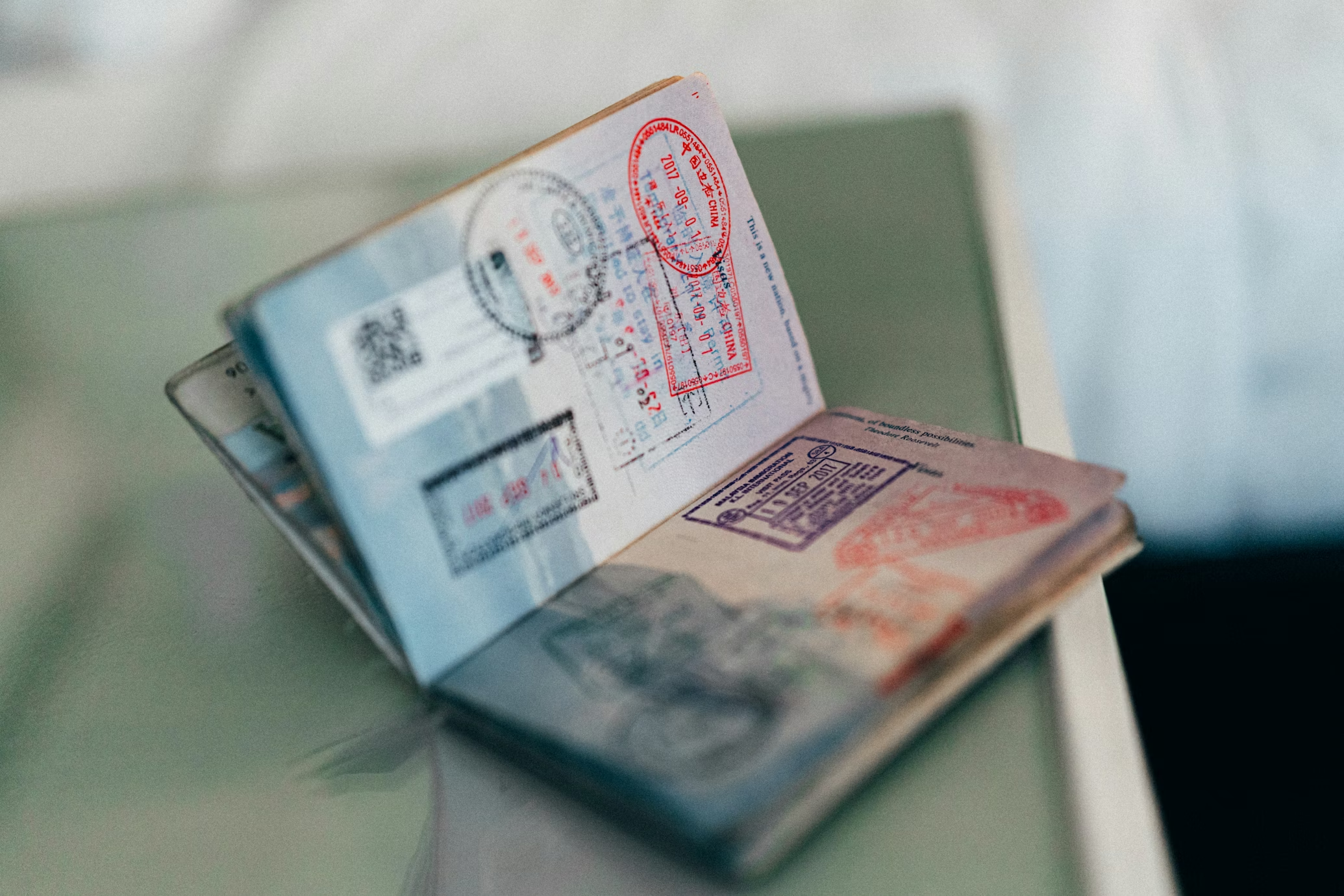
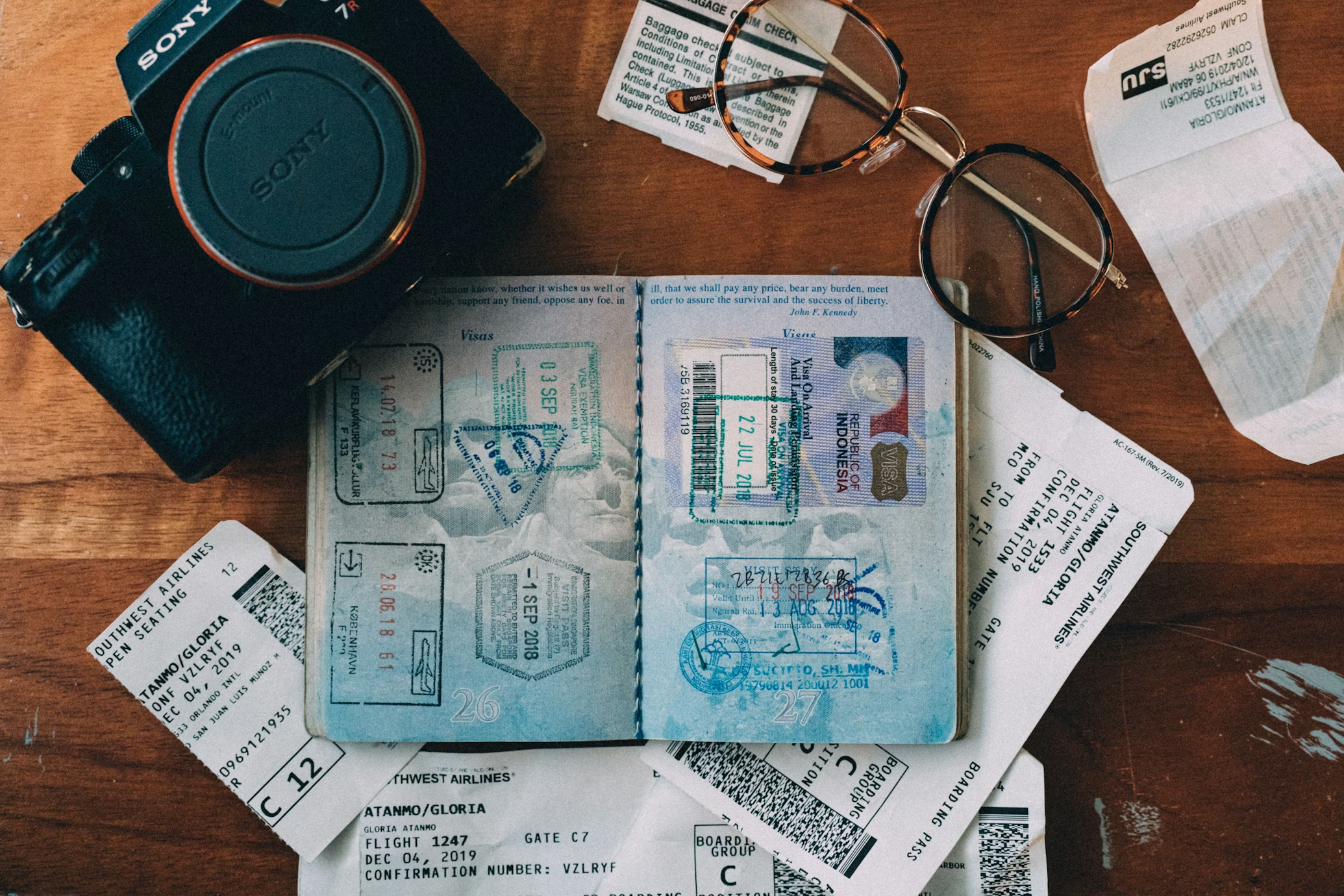
There's a tiny ritual most travelers share without ever really talking about it. You hand your passport across the counter, the officer flips through a few pages, picks a clean one, and the stamp lands with a small thunk. The ink is usually a little smudged, the date already starting to dry. You walk away feeling like you've arrived twice, once in body and once on paper.
That feeling is older than the booklet in your bag, and the booklet itself is younger than most people assume. Here's how the passport stamp came to be, and why the moment is quietly fading out at borders all over the world.
Before the stamp: letters of safe passage
Long before there was a stamp, there was a sentence. The earliest written record of a travel document we still have appears in the Book of Nehemiah, around 450 BCE, when the Persian king Artaxerxes gives Nehemiah letters to the governors of the lands beyond the river so they will let him pass. The text is essentially a passport without a page.
The Romans had their own version, called tesserae. These were small tokens or tablets that travelers carried to prove who they were and where they were heading. In medieval Europe, the equivalent was a "safe conduct" letter, hand-signed by a king or noble and sealed with wax so the courier on the other end of the border knew it was real.
The word "passport" itself first appears in English law in 1414, under King Henry V's Safe Conducts Act. For the next few centuries, these documents weren't stamped. They were written, sealed, and folded away like a personal letter that happened to grant you passage.
The first modern stamps (late 1800s)
The industrial age changed everything. Steamships and trains made international travel possible for ordinary people, not just diplomats and merchants, and borders started processing far more travelers than a hand-signed letter could keep up with. Officers needed something faster.
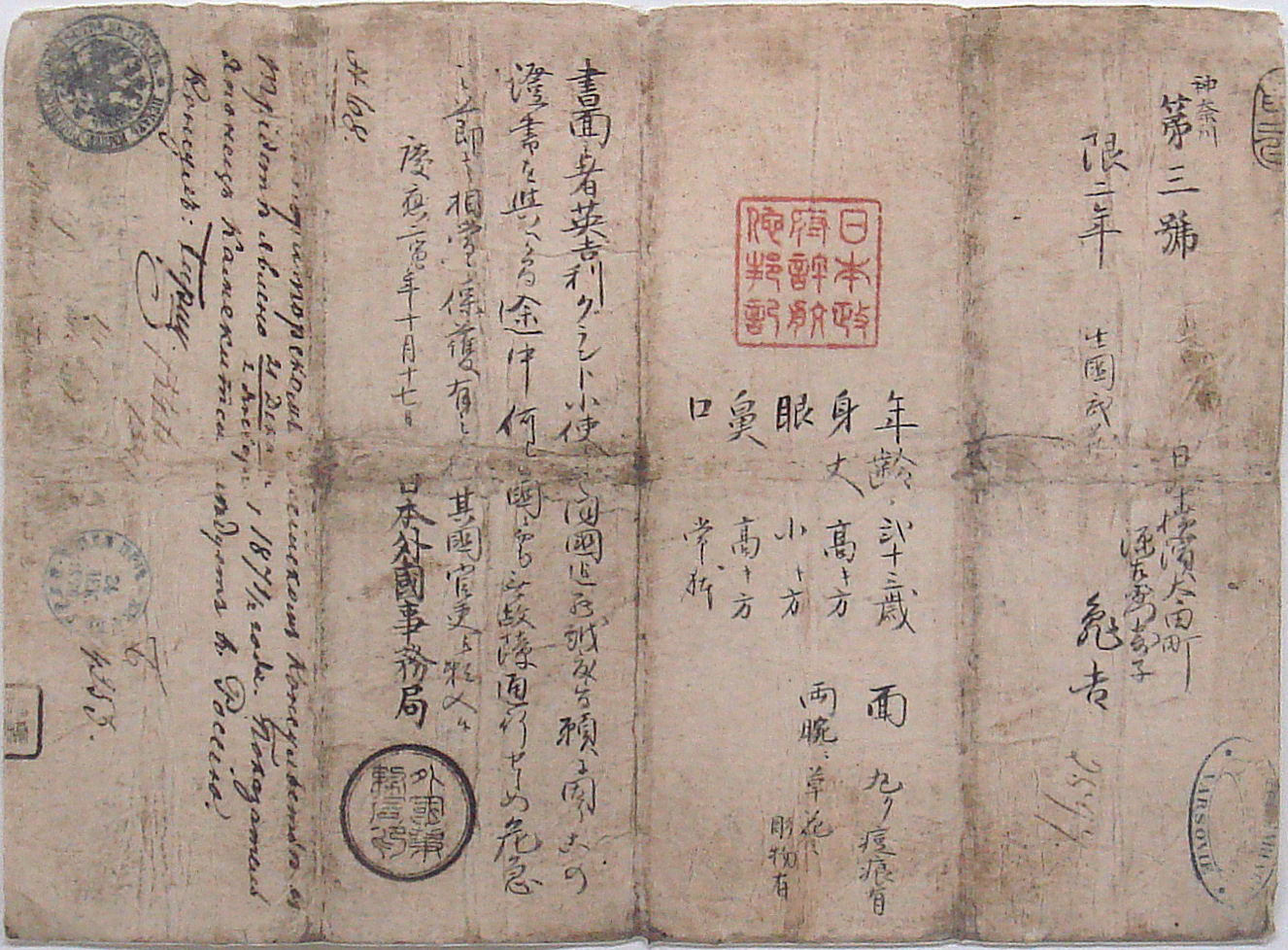
Inked entry and exit stamps started appearing in the late 1800s, mostly in countries with high traveler volume. Russia, France, and Japan were among the early adopters. These first stamps were strictly bureaucratic, closer to a tax receipt than a memento. Nobody asked for one.
1920: the year the modern passport was born
After the First World War, governments wanted a single international standard for identity documents. The League of Nations held the Conference on Passports, Customs Formalities and Through Tickets in Paris in 1920, and that meeting set the format we still use today.
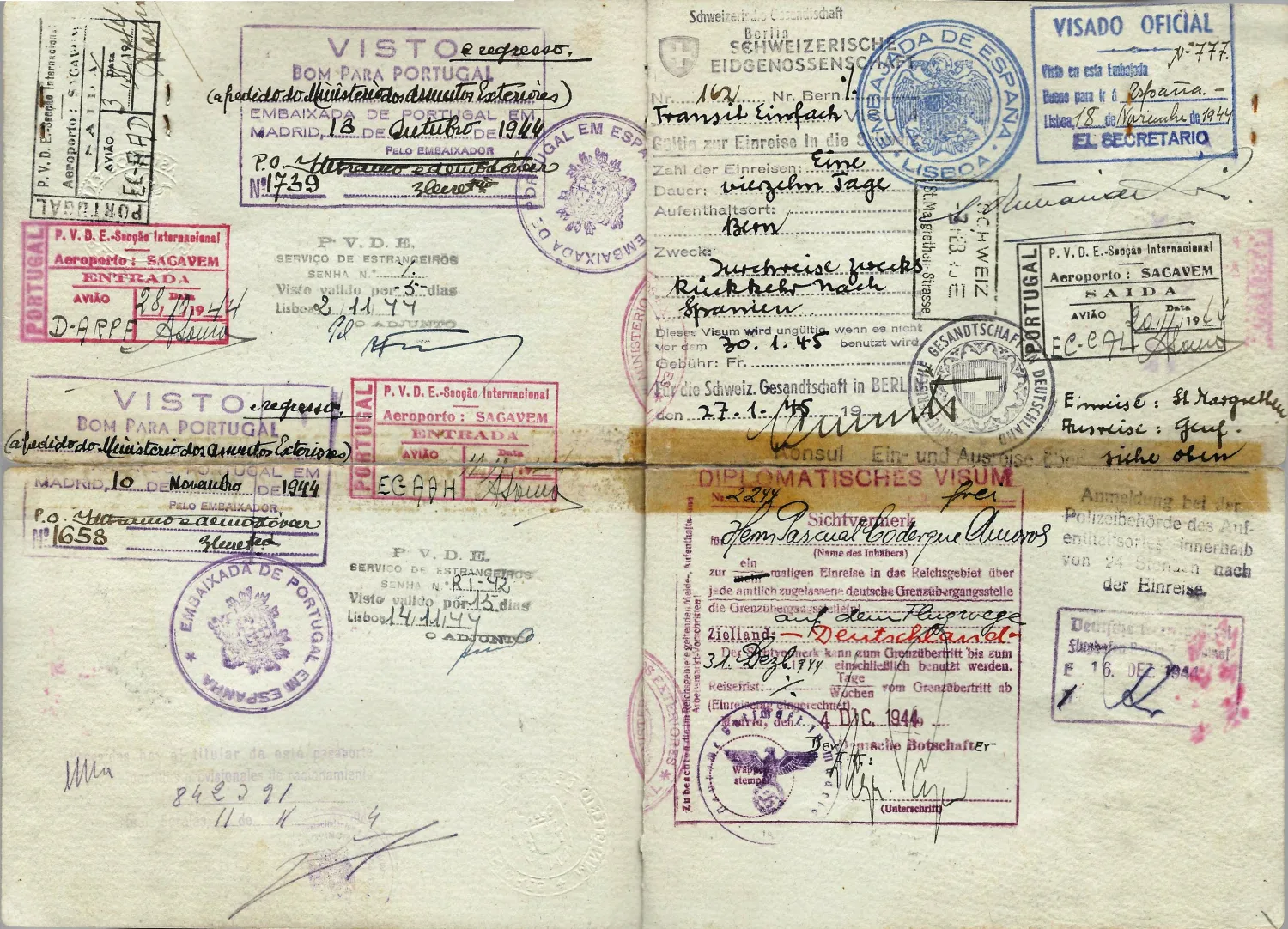
32 pages. A photograph. A standard size and shape. The convention of stamping for entry and exit on the inside pages, rather than appending a separate paper. Almost everything about the modern passport, including the small moment of a stamp landing on a page, traces back to that single conference just over a hundred years ago.
It's hard to overstate how much that one document shaped the next century of travel. The shape of the booklet, the way we hand it across the counter, the assumption that a country has the right to ink a mark on your personal record. All of it came out of 1920.
The conference also fixed one of the small details that gives a passport its physicality. The pages are clean by default, written on only by the official marks of the countries you pass through. A stamp is always a deposit, an addition to something blank, which is part of why it feels precious when one appears.
The golden age of stamps (1950s to 1990s)
After the Second World War, leisure travel became accessible in a way it had never been before. Tourists started travelling for the pleasure of it, and somewhere in those decades the stamp quietly changed meaning. It stopped being a record for the state. It started being a souvenir for the traveler.
People began asking officers for stamps, especially at small or famous borders. Countries leaned into the moment, some on purpose and some by accident. Japan's stamps are elegant little works of kanji and date. Thailand's spell out the port of entry with a precision that feels almost printed. Easter Island became famous for its moai stamp, a tiny carved head you can only get if you actually go to Rapa Nui.
Machu Picchu was never an official border, but the site started offering its own "second passport stamp" in a guestbook by the entrance, free for the asking. The tradition grew into folklore. Travelers came back with two stamps: the Peru entry stamp, which proved you'd arrived, and the Machu Picchu one, which proved you'd actually shown up.
Some borders became destinations partly because of their stamps. Bhutan's stamp is a small, carefully inked design that travelers seek out as much as the country itself. The Galápagos issues a separate stamp that doesn't exist anywhere else in Ecuador, so collectors fly out specifically for it. Antarctic research stations stamp passports for the small number of tourists who make it that far south, sometimes by hand, sometimes in unusual colors.
By the 1980s and 90s, a full passport felt like a quiet badge. Friends asked to see each other's. People flipped through other travelers' booklets the way other people flip through photo albums. The pages told a story even before anyone said a word.
The slow fade
The shift away from stamps started slowly and is finishing fast. The Schengen Agreement, signed in 1985 and fully in force across most of Western Europe by 1995, ended internal border stamping between Schengen countries. If you fly Amsterdam to Lisbon today, your passport stays closed.
In the 2000s, biometric e-passports rolled out worldwide. The new ones carry a chip with your photo and personal data, and the kiosks that scan the chip don't need ink to confirm you. A machine logs your arrival. A camera matches your face. The page stays blank.
Then countries started dropping stamps entirely. Argentina ended routine entry stamps in 2022. Peru followed in 2023. Several Schengen countries already stamp less often than they used to, sometimes only on request, sometimes not at all.
The European Union's Entry/Exit System, known as EES, is rolling out across 2025 and 2026 and will end stamping for non-EU visitors across all 29 Schengen countries. The system records biometric data on entry and exit so the 90-days-in-180-days rule can be enforced automatically. The stamp was always doing double duty, a record for the border and a souvenir for the traveler. EES keeps the first half and removes the second.
The shift isn't unique to Europe. The US, the UK, Canada, and parts of Asia have been heading this direction for years through eGates, automated kiosks, and biometric scanners. EES is just the largest, most coordinated version of a change that's been happening at every airport with a chip-reader for over a decade. If you want to see the full picture, I keep a running guide on countries that no longer give passport stamps.
Why the ritual still matters
A digital record of an entry is not the same as a stamp. The chip is invisible. The kiosk is silent. There is no page to flip to, no quiet decision about where the stamp should land, no small pride in seeing your booklet fill up over years of trips.
It might sound sentimental to defend a piece of bureaucratic ink, but the stamp is one of the only physical objects most travelers ever collect on a trip. A boarding pass gets thrown away. A ticket fades. A stamp stays in the same place you carry your identity, which makes it feel like part of you.
A stamp also has a small element of chance. You can't choose which page the officer lands on, what color the ink is that day, or whether the mark sits straight or tilted. Two stamps from the same border, on the same day, never look quite the same. A digital log can't replicate that. The chip in your passport doesn't know which page you would have picked.
I think travelers feel this loss even when they can't quite name it. The first time you cross an EU border with the new system and walk out without anything to show for the crossing, something is missing. It's small, but it's real.
Keeping the ritual alive
If the disappearance of the physical stamp bothers you the way it bothered me, that's why I built Stampie, a passport-style travel tracker where travel stamps live on your phone instead of fading out at the border. You fill your own pages as you go, the small ritual stays, and the booklet doesn't end up at the bottom of a drawer.
It's not the same as paper. Nothing is. A screen can't give you the thunk of the stamp or the moment of an officer choosing your page. But it can hold the habit when the borders stop offering one.


The history of the stamp tells us it was always a small mark with a big job, holding onto a moment that would otherwise pass without notice. The form is changing. The job, I hope, will outlive the ink.
Behind Stampie

The idea for Stampie started in Peru 🇵🇪, back in 2023. I’ve always loved collecting passport stamps, that small thrill of seeing a new one land at the border. On that trip they just waved me through. No stamp. A small thing, but it stuck with me.
Turns out a lot of countries have quietly stopped stamping. A couple of years later I built the first version of Stampie for a hackathon, somewhere to keep that little ritual alive even when the ink doesn’t come. A passport-style journal for anyone who still wants this souvenir from every trip.
It quietly found its way to people. As an indie team, we keep working on Stampie in coffee breaks, on weekends, and from wherever the next trip takes us.

You might also like
How this post was made: AI-assisted tools may be used in research, drafting and image generation, then reviewed and edited by the author. Travel policies change quickly. For visa, border, and entry requirements, please check primary sources (official immigration sites, your embassy) before you go.
Spotted an error or something that doesn't look right? Report a concern and we'll take a look.